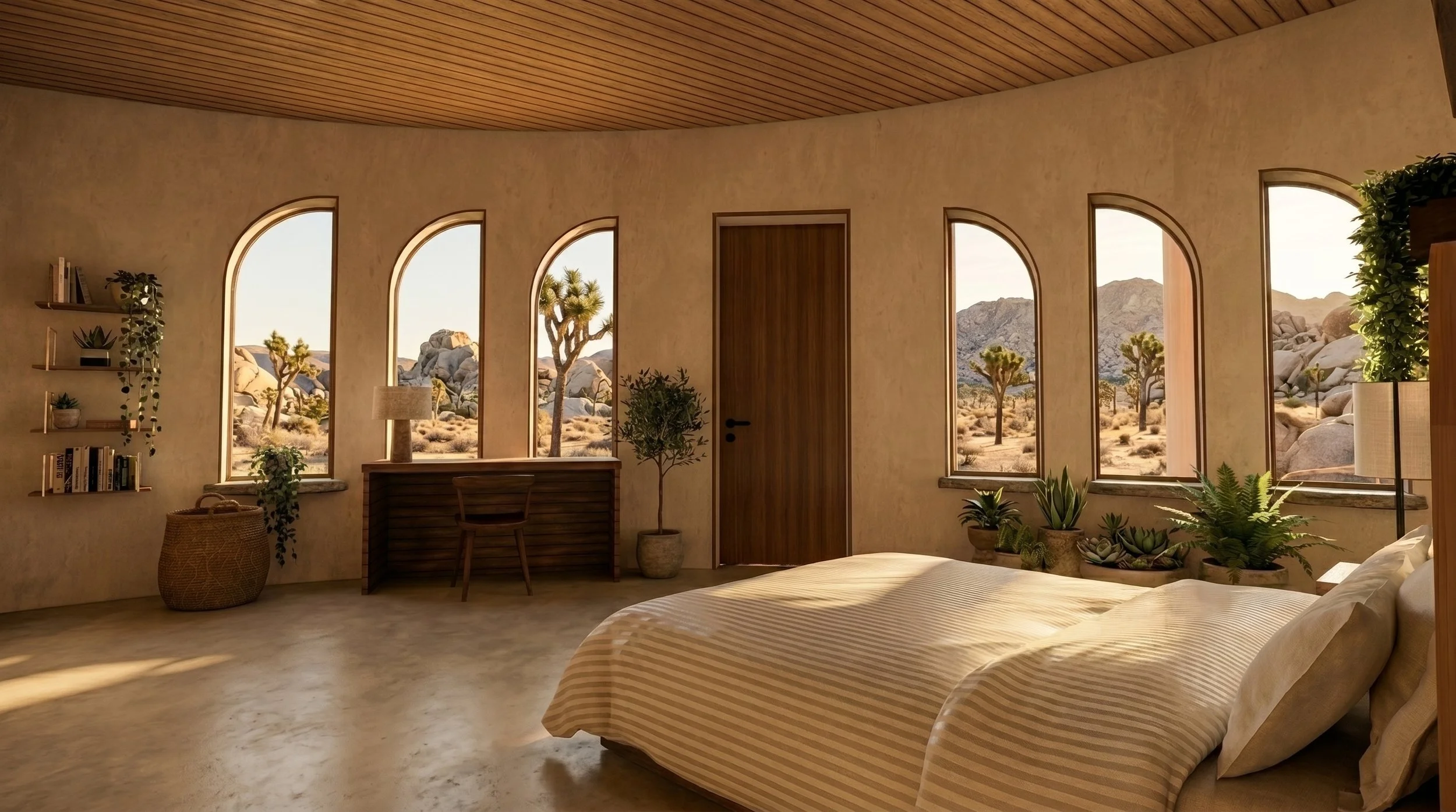
MIND - Neuroaesthetics

NEUROAESTHETICS
Neuroaesthetics is the study of how the brain processes aesthetic experience - including built space. It draws on neuroscience, environmental psychology and cognitive science to explain why certain spaces produce calm and restoration while others produce stress and fatigue.
The findings are specific. Ceiling height affects cognitive mode. Color temperature regulates circadian rhythm and cortisol production. Acoustic texture determines whether the nervous system remains alert or releases into rest. Spatial sequence - the experience of moving through a building - produces anticipation, arrival, expansion and containment as deliberately as music produces emotion.
FRACTAL AND RECURSIVE GEOMETRIES HAVE BEEN SHOWN TO PASSIVELY REDUCE STRESS BY 60%.
These are not soft considerations.
They are design parameters.
SPACE IS NOT NEUTRAL.
The built environment produces measurable effects on the human nervous system. We design for specific outcomes - grounding, clarity and restoration. We spend 80% of our time indoors, and our epigenetic response to our environment will be carried on by our descendants / future generations. The stakes are very high.
This is architecture as healing technology. Not as metaphor, but as practice.
NEUROAESETHETIC CONSIDERATIONS
We design for four measurable conditions: light, acoustics, spatial sequence, and biophilia.
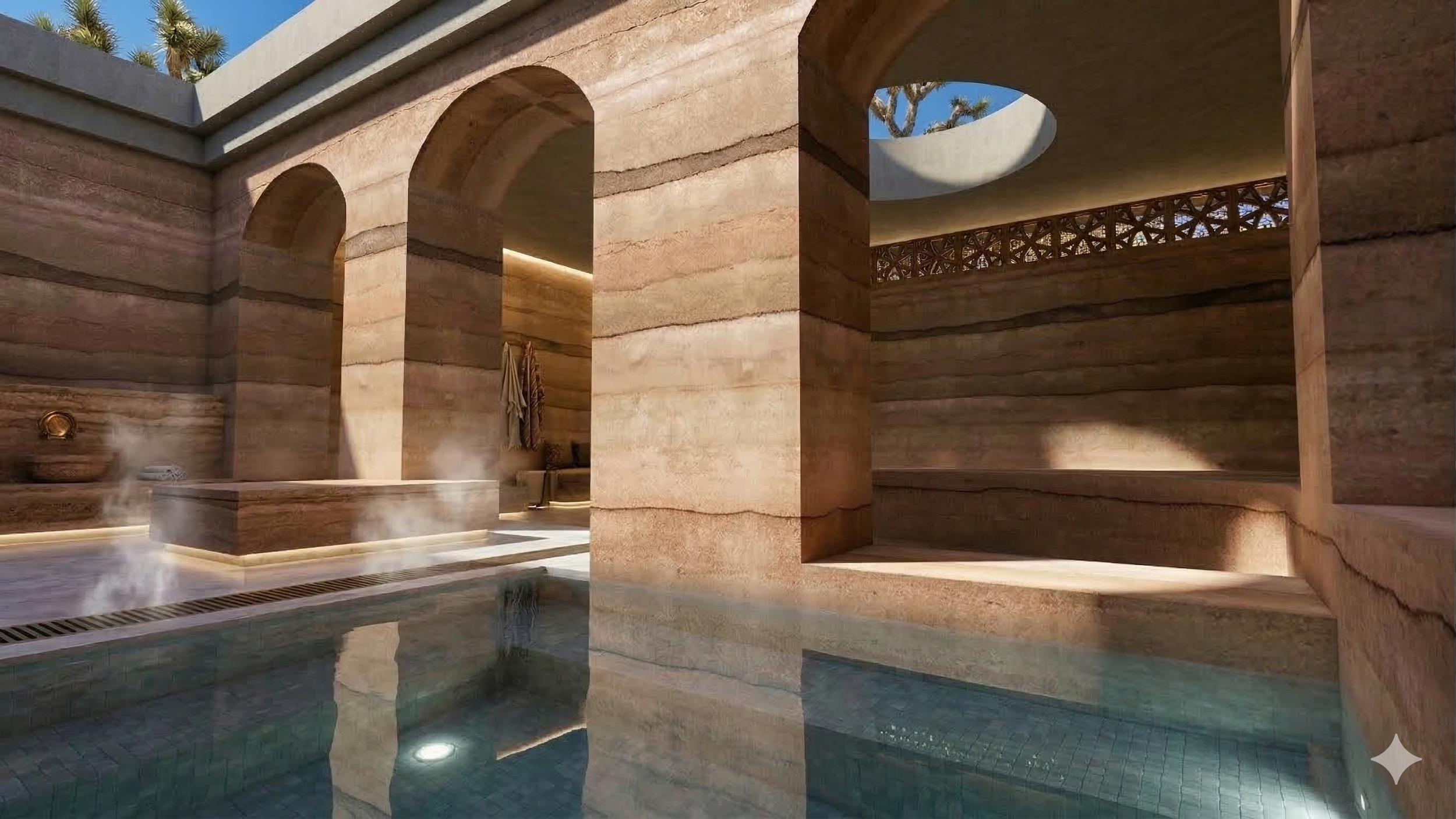
LIGHT
Natural light is biological information. The angle, color temperature and intensity of light at different hours regulate melatonin, cortisol and circadian rhythm. We design daylighting as a primary architectural element - not a supplement to artificial lighting but the primary system. Artificial light is calibrated to support it.
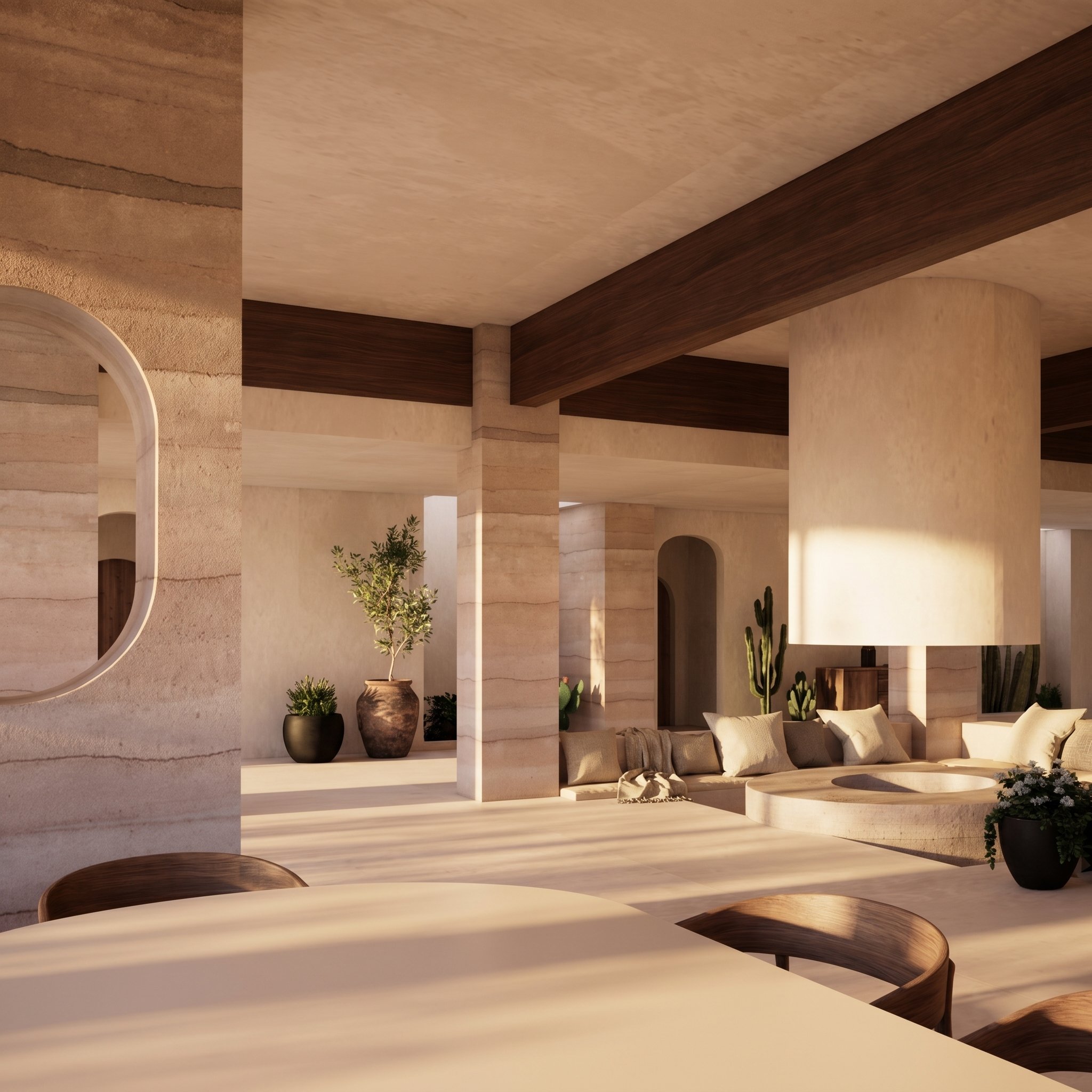
ACOUSTICS
The acoustic quality of a space is felt before it is consciously heard. Hard parallel surfaces create reverberation that keeps the nervous system alert. Natural materials, irregular surfaces and considered geometry absorb and diffuse sound in ways that signal safety and rest. We specify for the acoustic outcome each space requires.
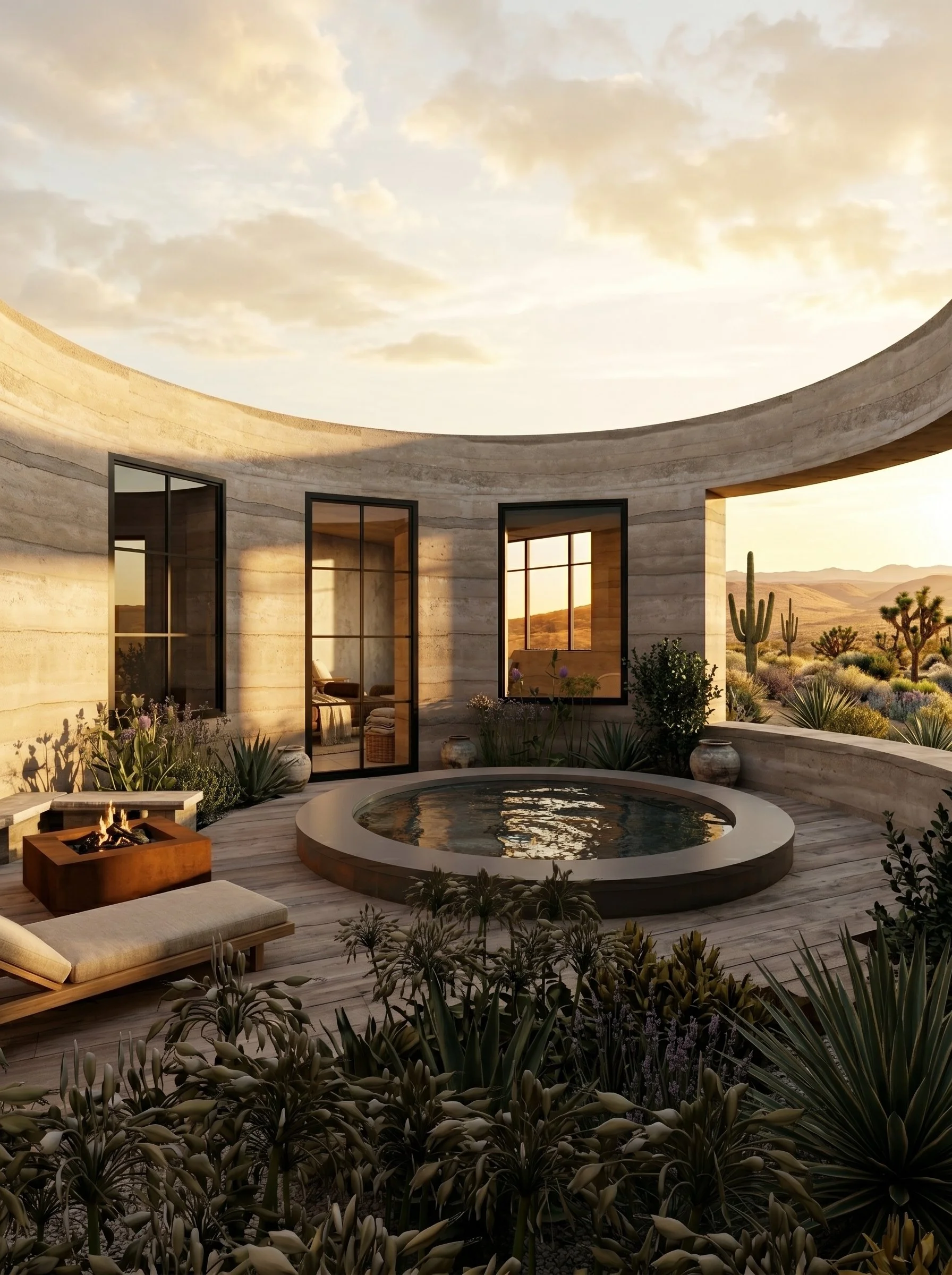
SPATIAL SEQUENCE
A building is experienced as a series of transitions. Compression and expansion, enclosure and view, darkness and light - these are choreographed to produce specific states at specific moments. Entry sequences that decompress. Thresholds that mark transition. Rooms that open toward landscape at the moment the body needs release. This requires as much precision as any structural decision.
BIOPHILIA
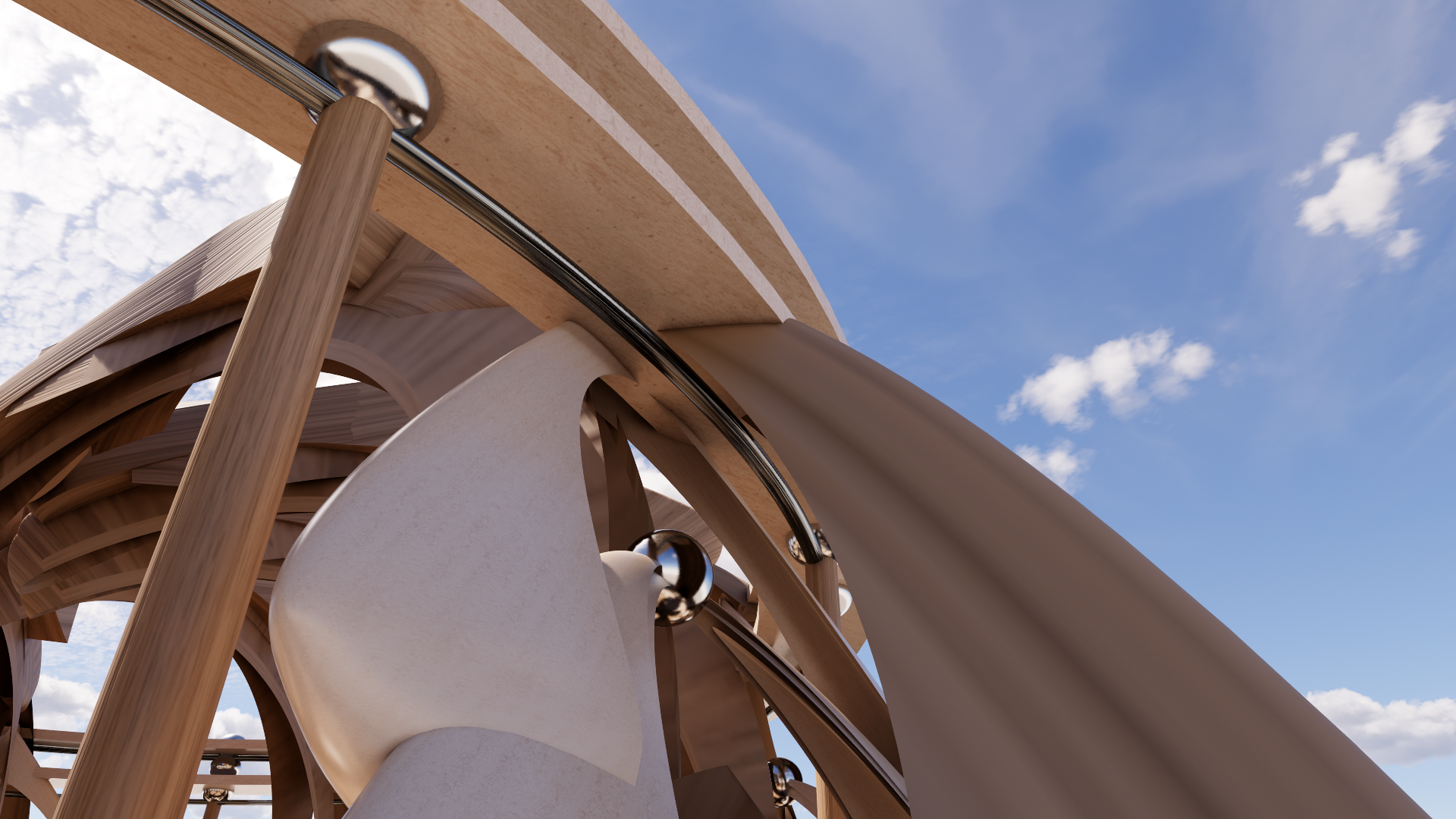
The human nervous system evolved in nature. It responds to natural cues - organic materials, views of landscape, natural light patterns, fractal geometry - with measurable reductions in stress and improvements in cognitive function. Biophilic design is not the addition of plants to an otherwise inert space. It is the fundamental orientation of a building toward the natural world.